The Miraculous Journey of Edward Tulane
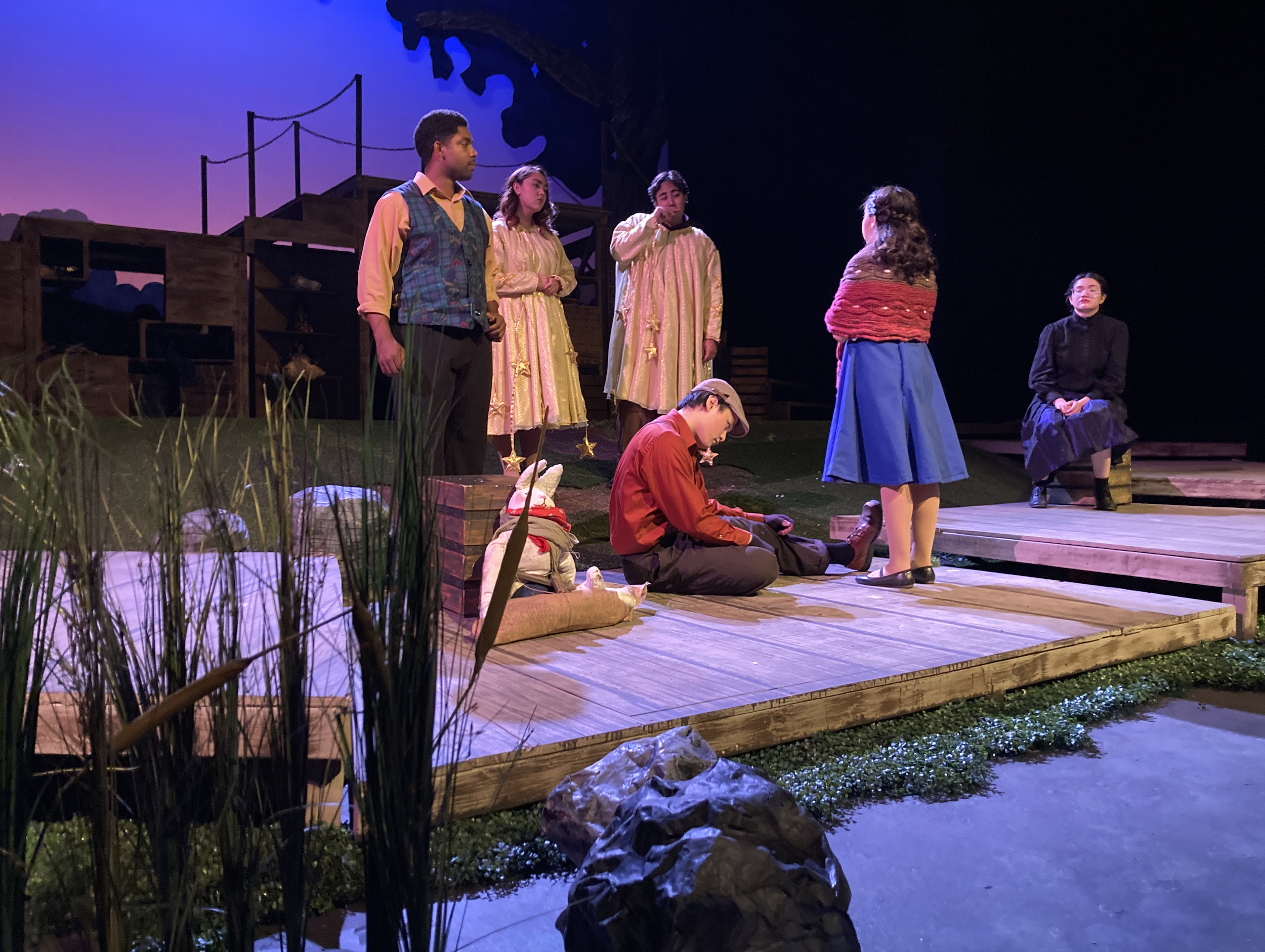
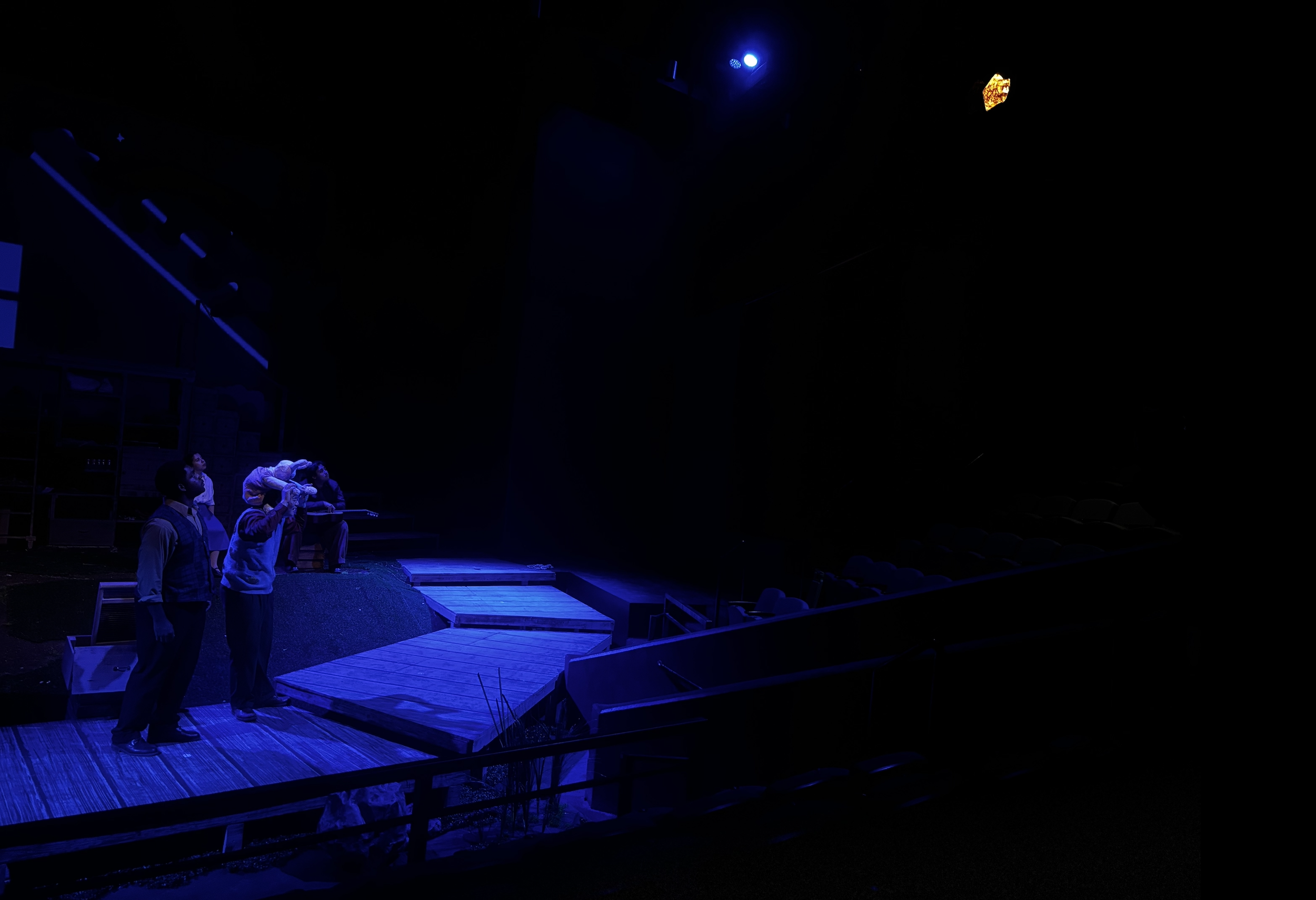
“I find comfort in the stars. There’s comfort in knowing my old friends are out there watching.”
Challenges
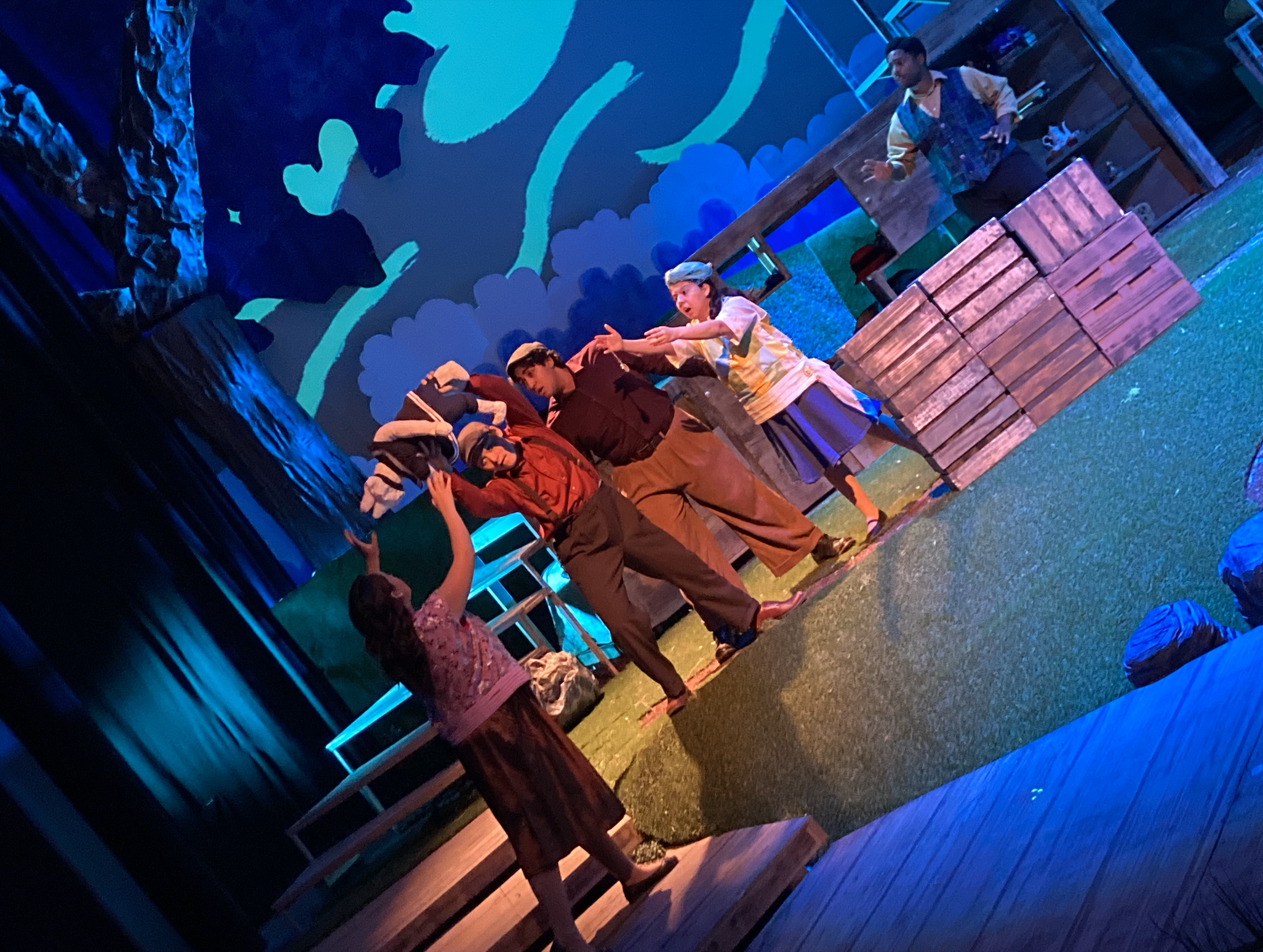
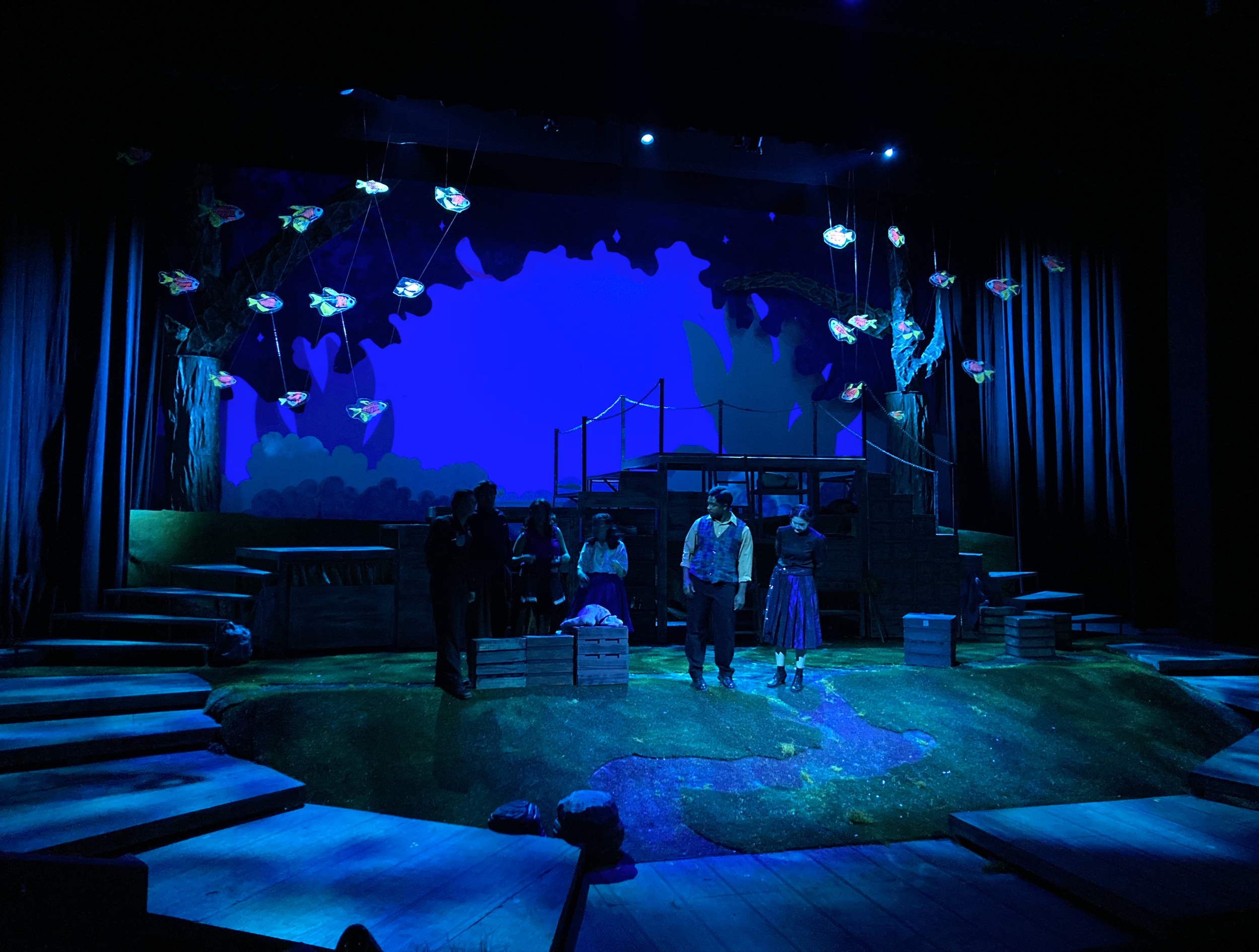
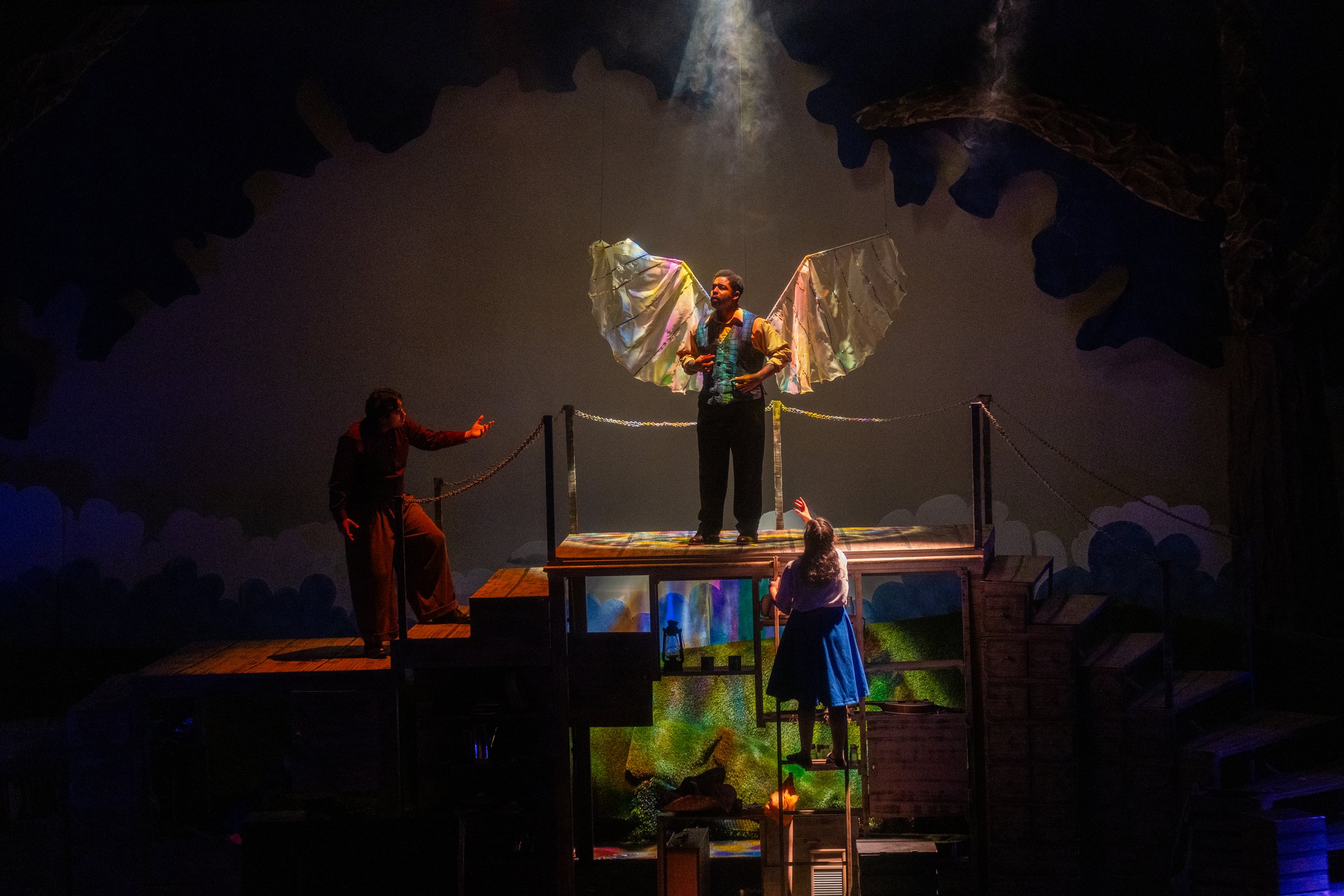
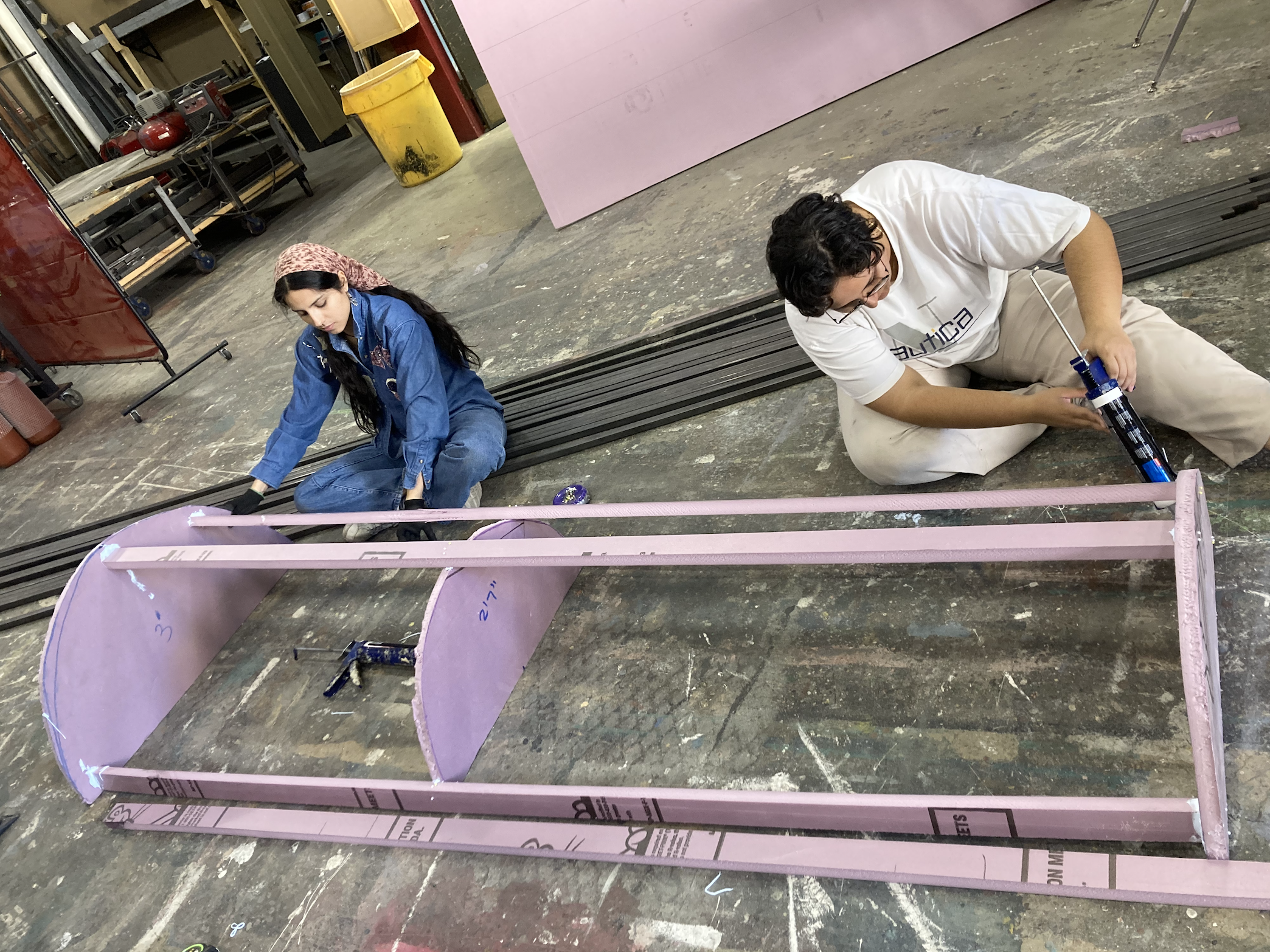
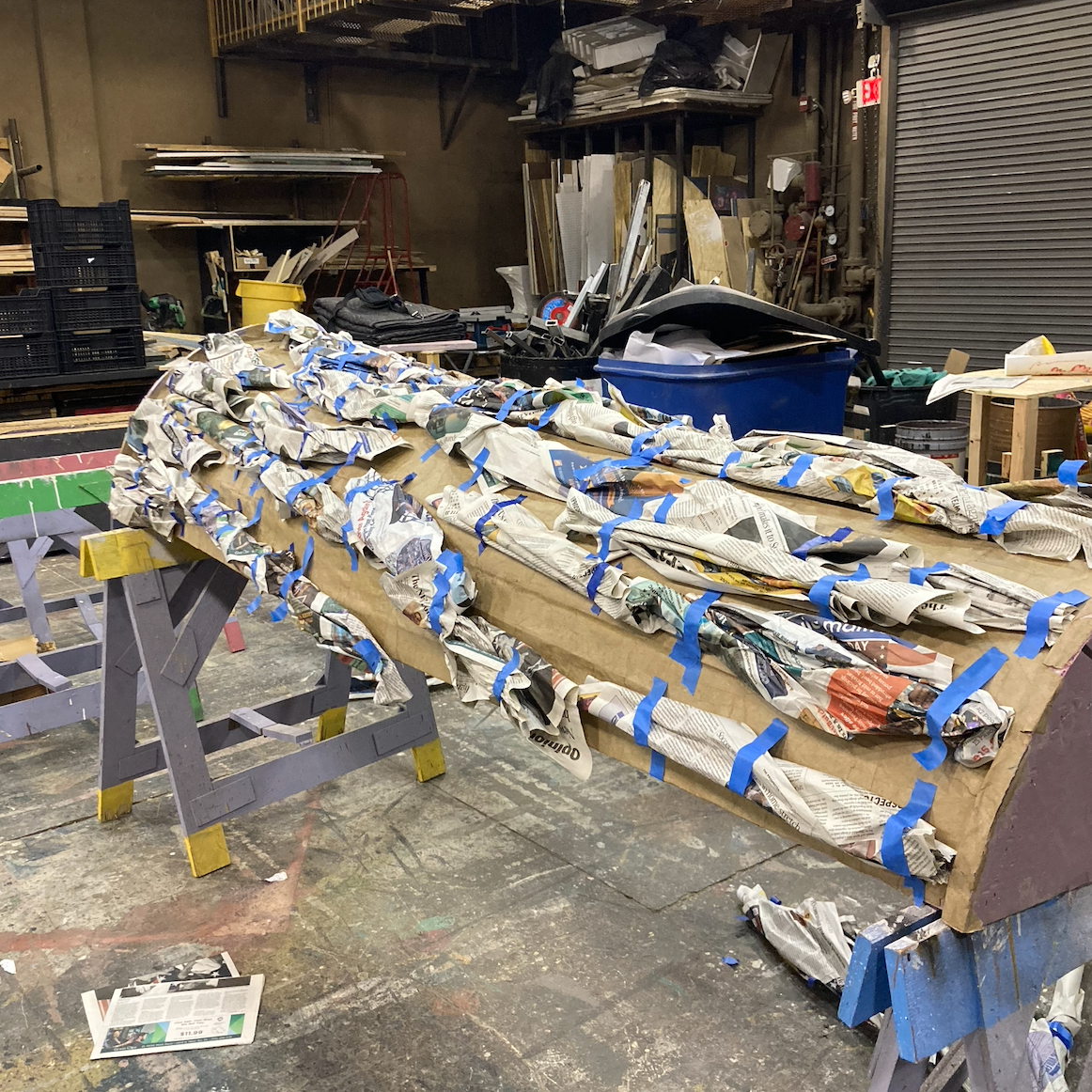
We had to create 2 giant 20 foot tall trees in the back of the set, with next to no space. We knew, due to their height and close proximity to the cyc, we had to make them relatively light, that in case of emergency, they would do minimal damage. The problem is, the lighter the material, the more fragile it tends to be. We had limited options and ended making the trees out of Foamular and paper machê, all attached to a wooden base. Once completed, we rigged the top half (branches) up to our fly system and joined it with our trunk which was safely attached to our wooden base on the floor. It took a lot of time, trial and error, and effort to get them up, but helped create a frame for the set that I could not have gone without.
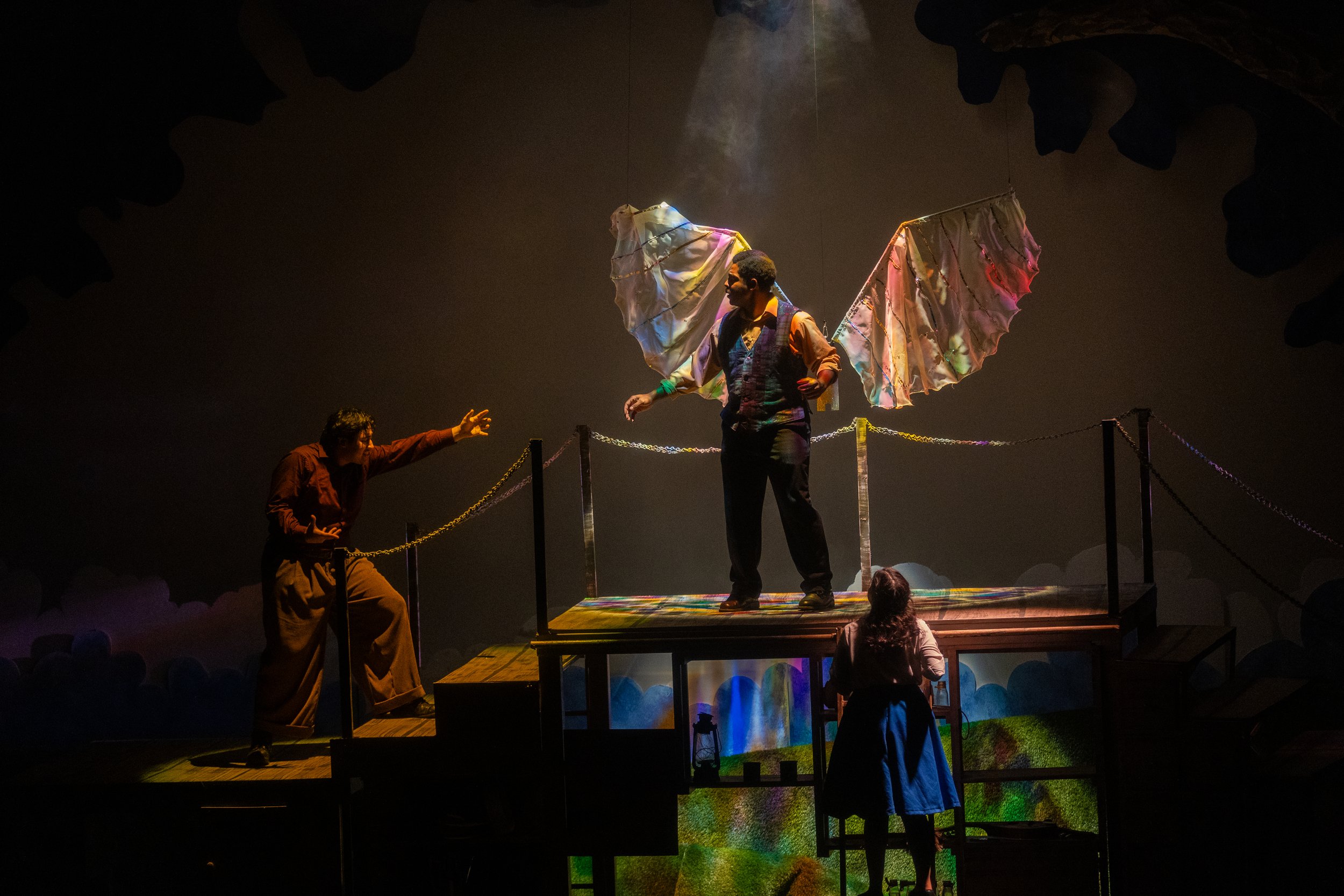
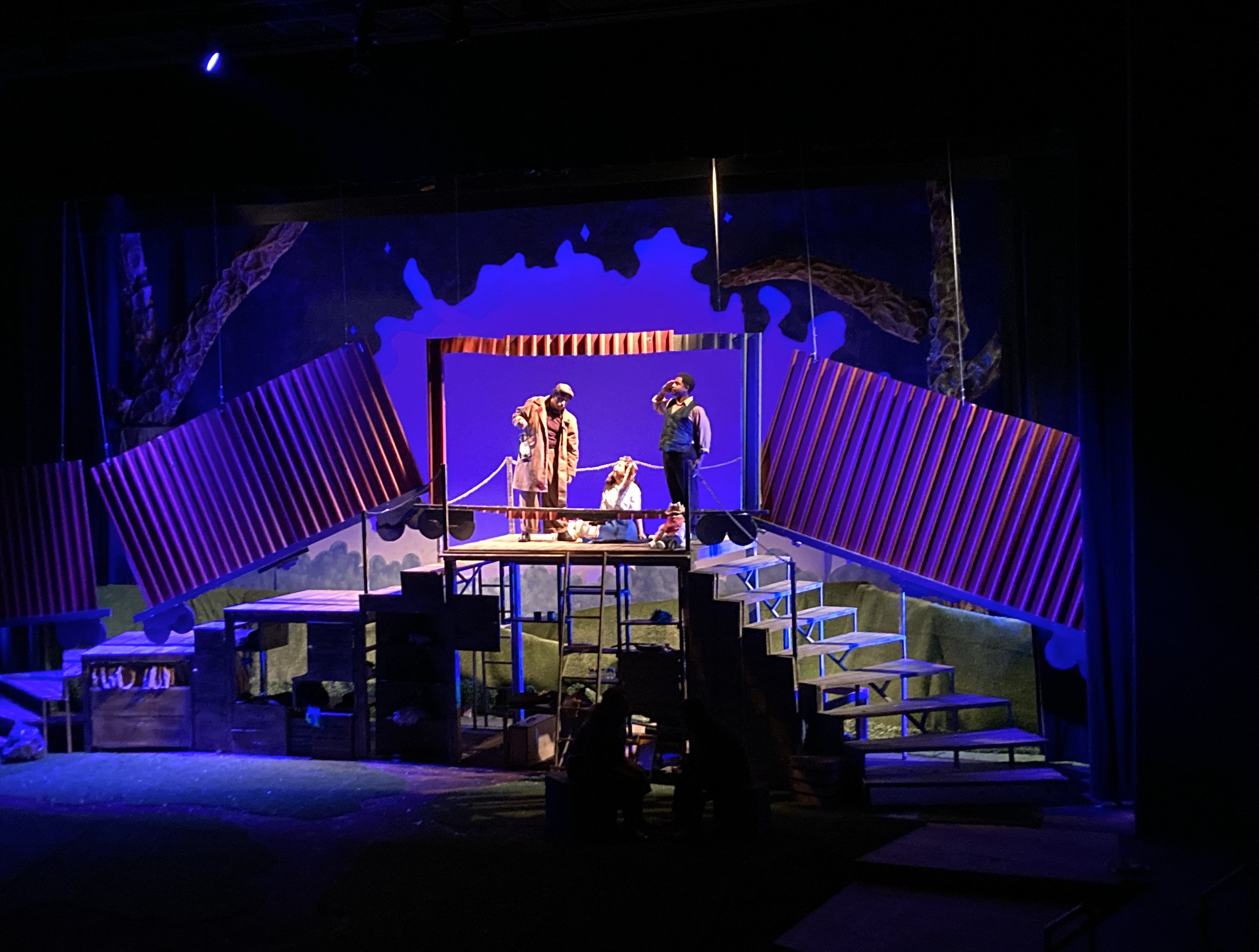
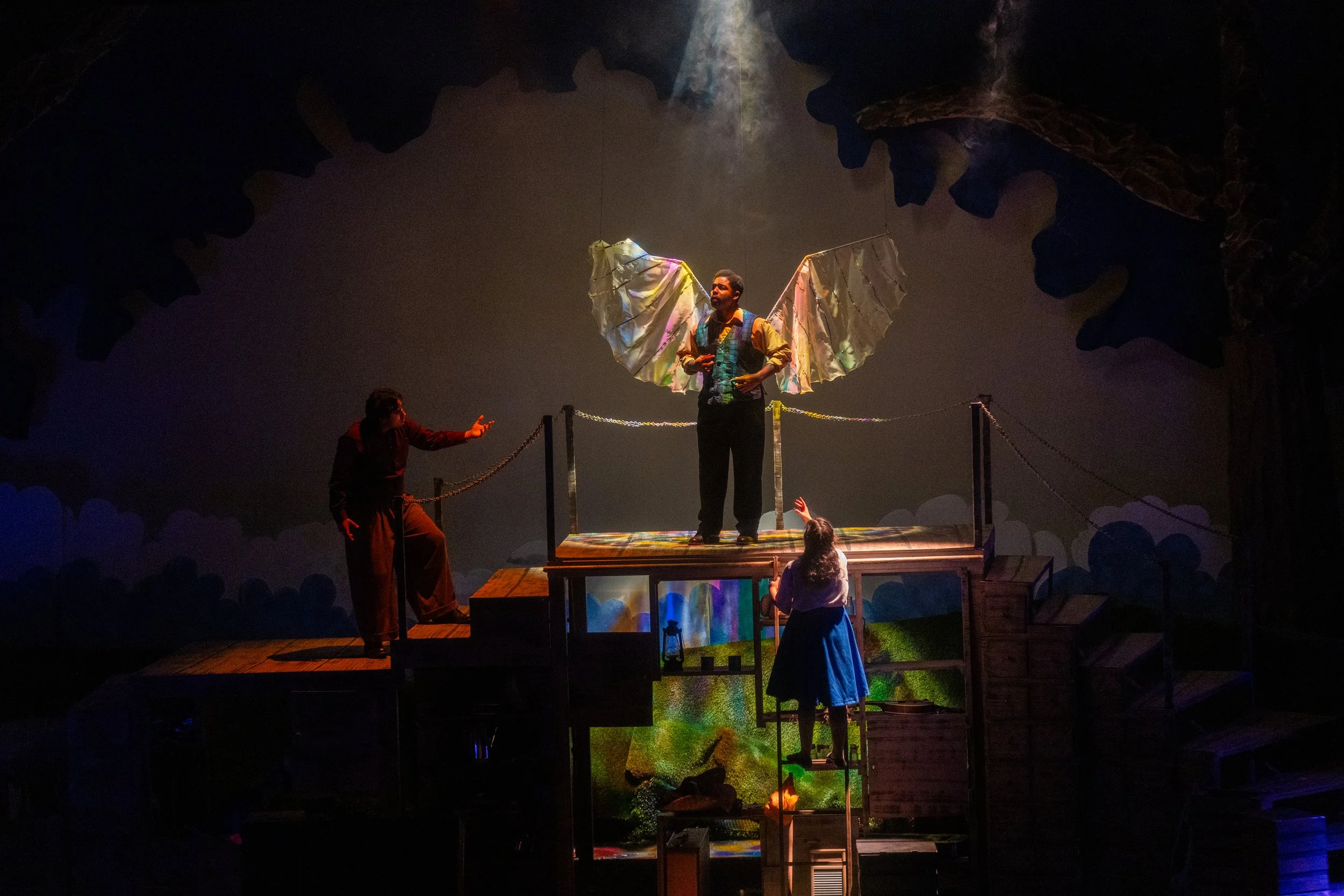
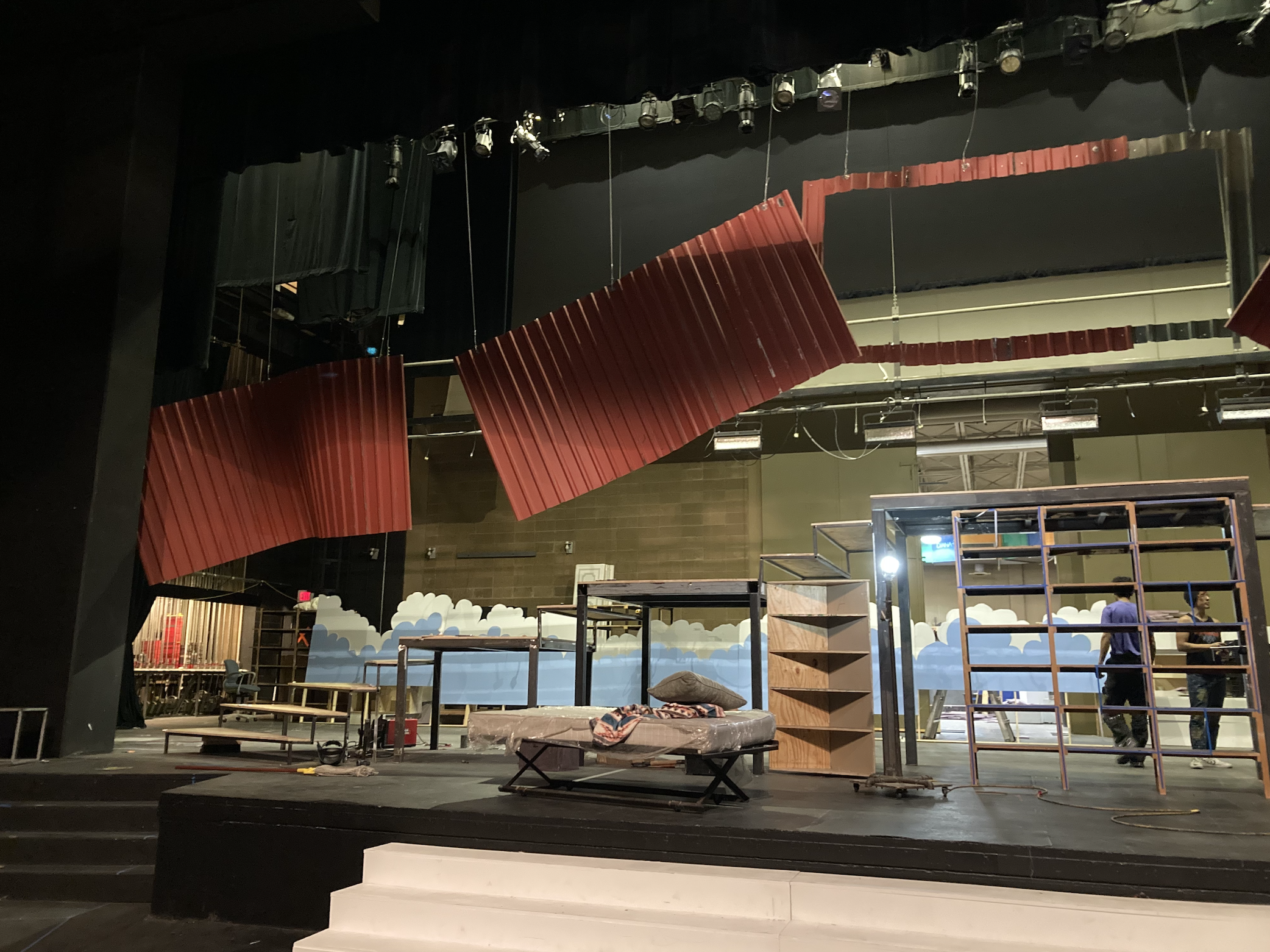
Also hung on our rigging system were willow leaves, various underwater fish, magical wings, and of course, our big red train. Rigging was a challenge we faced for the duration of the show due to the limited space we had. We had various large elements that had to be flown in and out easily without disturbing the other pieces, or any of the lighting rig which was on the pipes between/next to them. Thanks to careful rigging and our meticulous flyrail team, the show’s various rigged elements went on without a hitch.
Directed By Adriana Dominguez
Stage Manager: Maya Lavin
Scenic Designer: Arely Garcia
Costume, Hair & Makeup Designer: Lee Nixon
Lighting Designer: Rubysella Erickson
Properties Designer: Reggie Garcia
Projections & Sound Designer: Victor Maldonado
Background
Dwayne Hartfords adaptation based on the children’s book “The Miraculous Journey of Edward Tulane” by Kate DiCamillo, we explore the physical and emotional journey that a porcelain rabbit named Edward endures after being thrown overboard a ship by his first owner, Abilene.
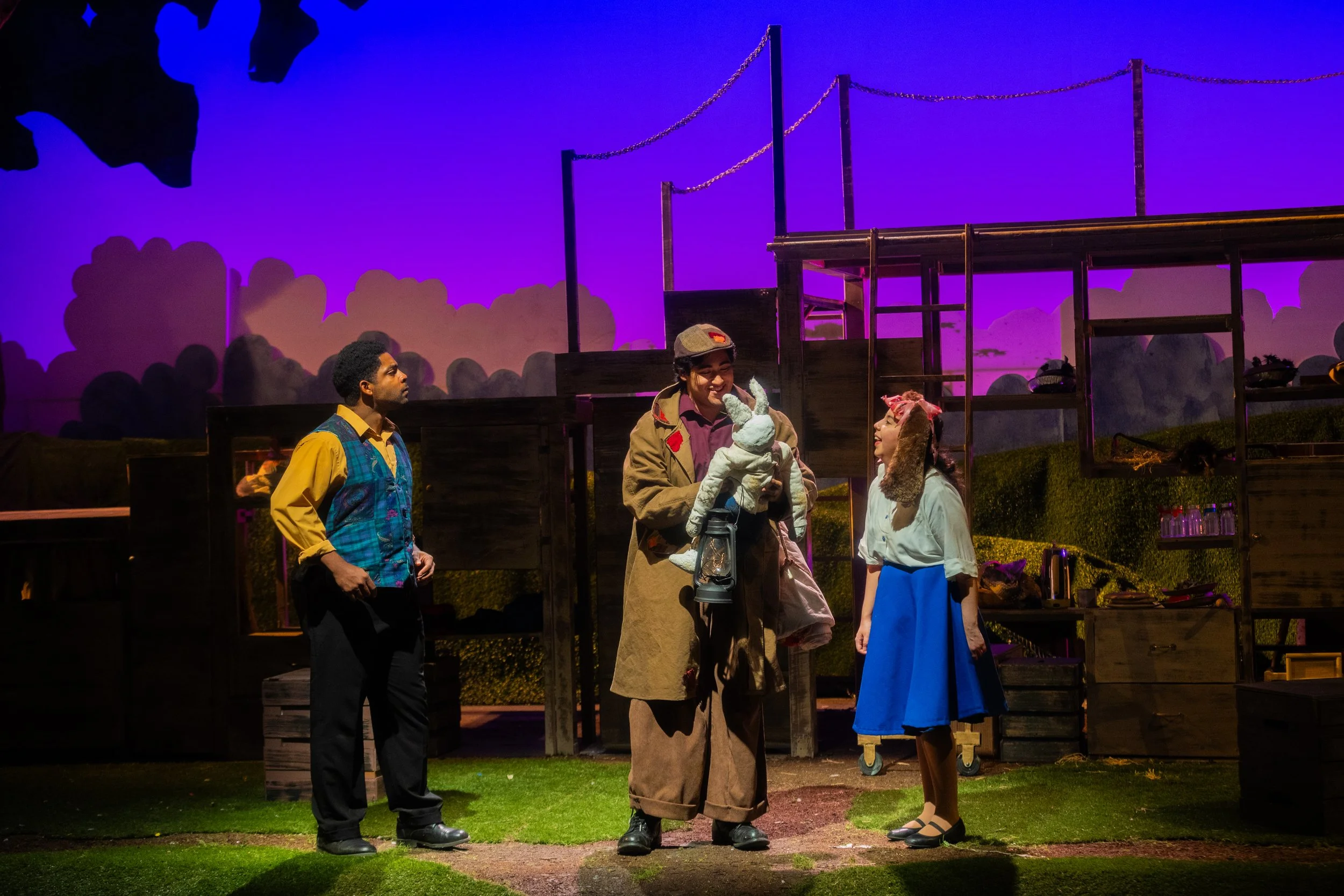
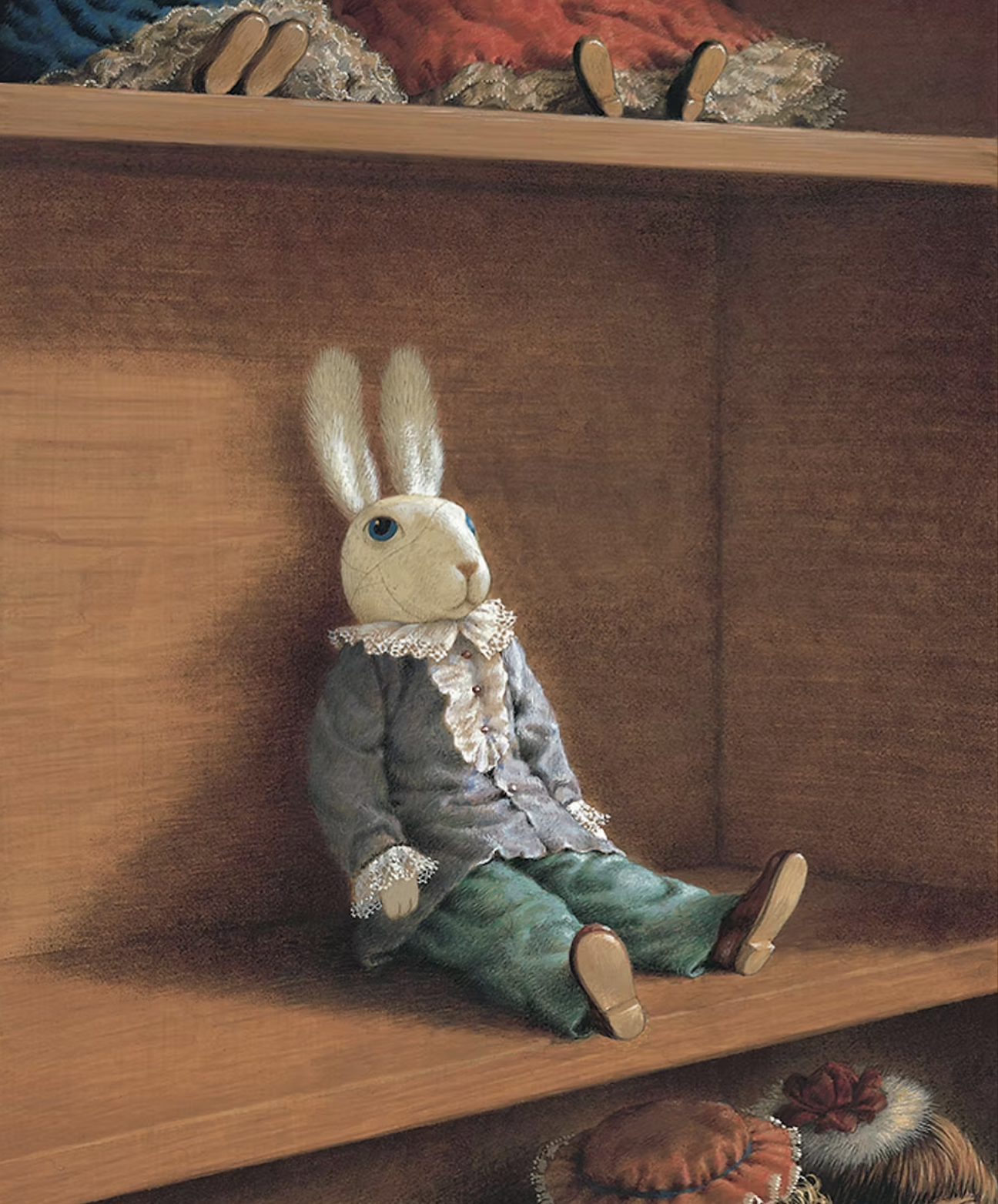
We knew this was going to be a production aimed and shown to young audiences, and our director gave us one rule in our designs: Storybook illustration, not cartoon. She wanted to create something emotionally grounded that would speak to the children, rather than patronize them. I took a lot of inspiration from the illustrations by Bagram Ibatoulline who actually made illustrations for the book. Thanks to the story starting in the 1920’s, I also took various inspirations from the Art Nouveau usage of nature and Art Deco’s usage of shape and line.
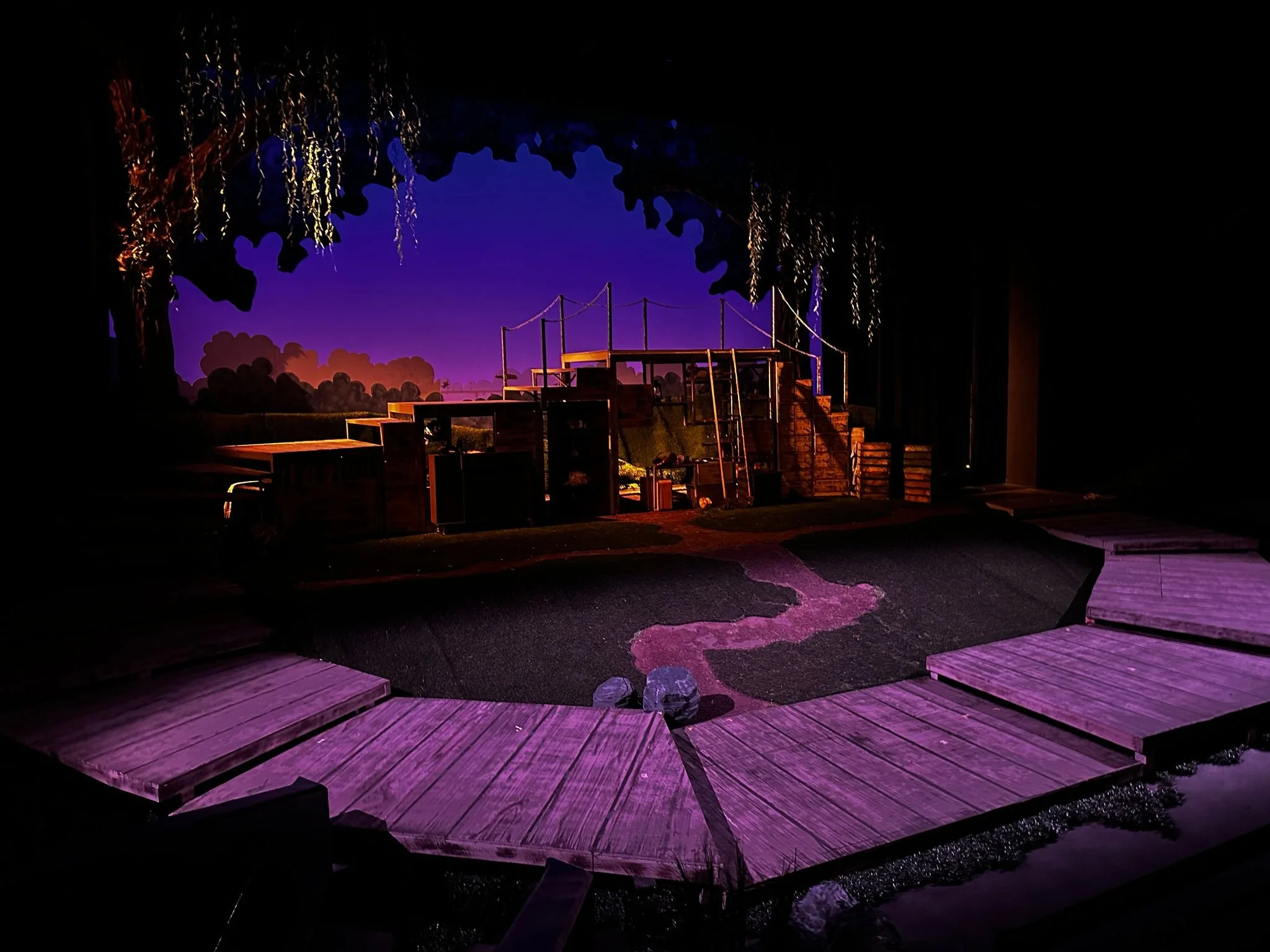
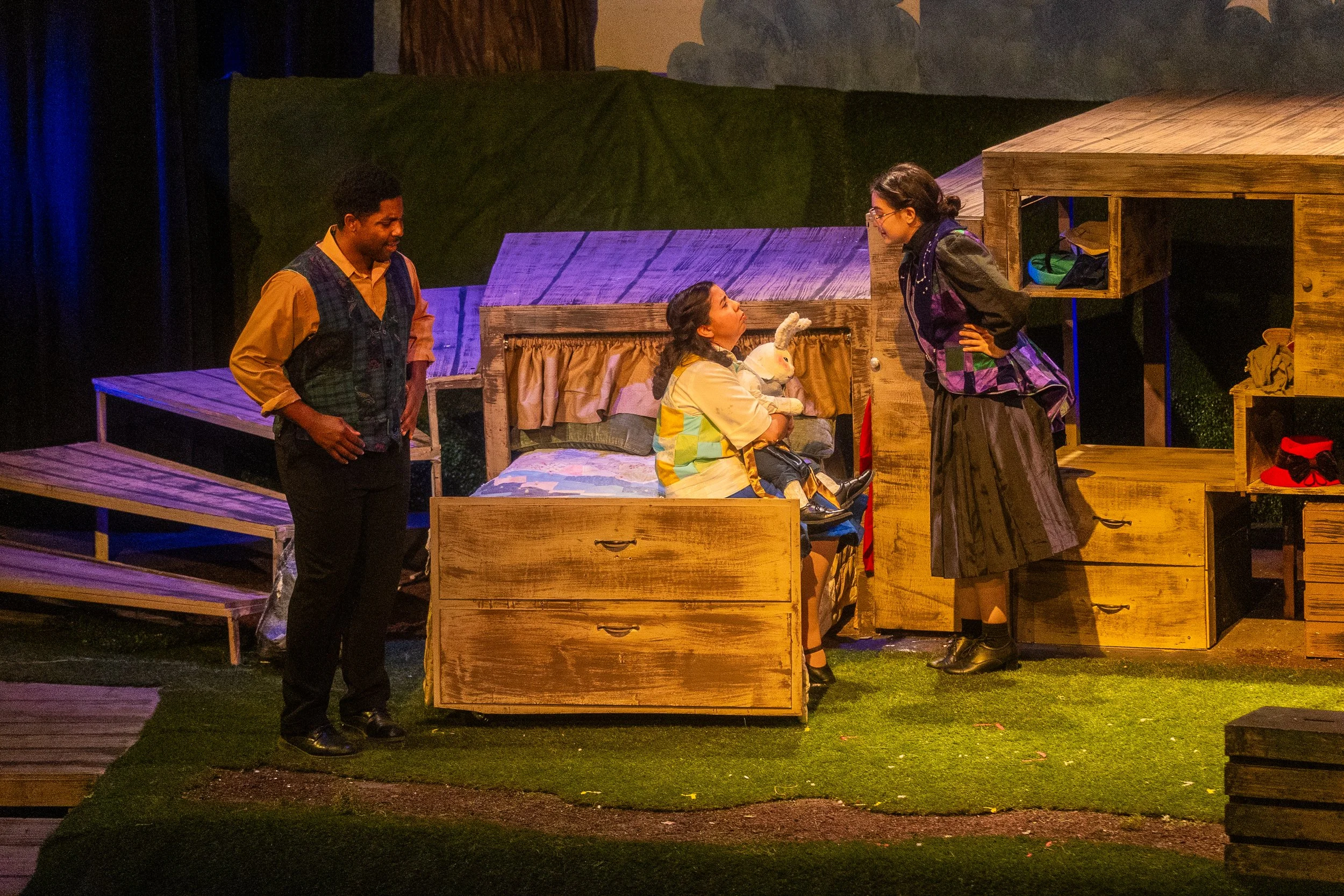
Our story spans across 20 years, from under the stars on southern fields, to the bottom of the ocean. I needed to make a set that was malleable and a playing space for our actors to transform and play dozens of different characters. One of the easier solutions is to make a minimal set, something that leaves everything up to imagination and interpretation. I decided to go with the opposite. I knew hundreds of children were going to see this show, and I wanted to give them a visually exciting memory of theatre to take with them.
Process
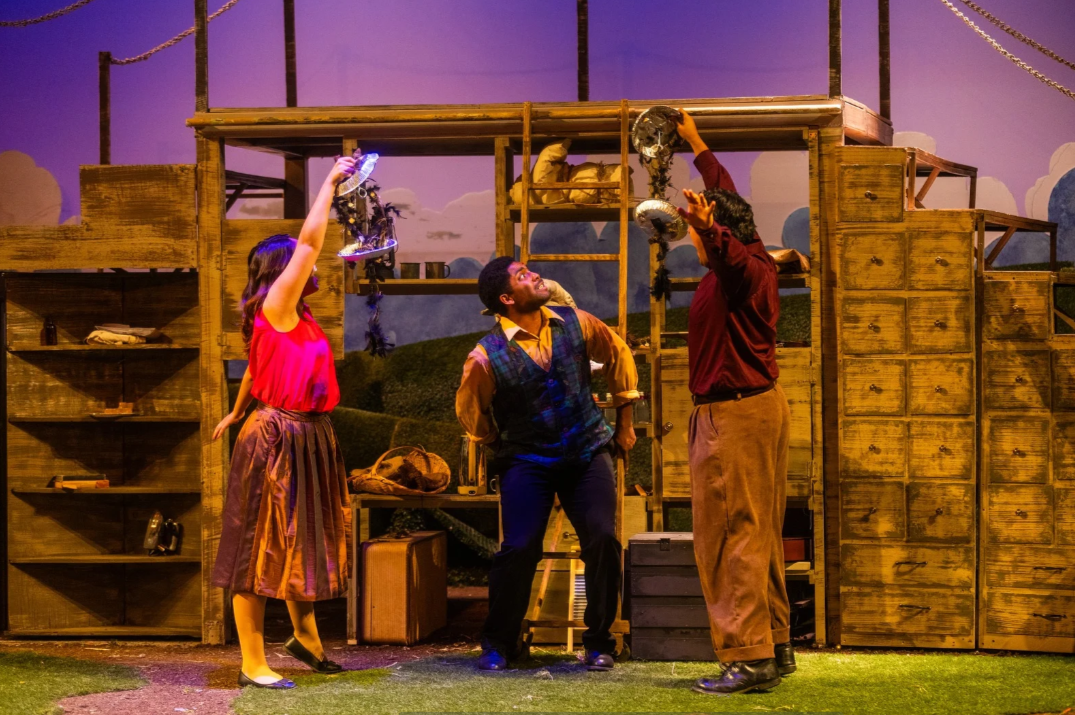
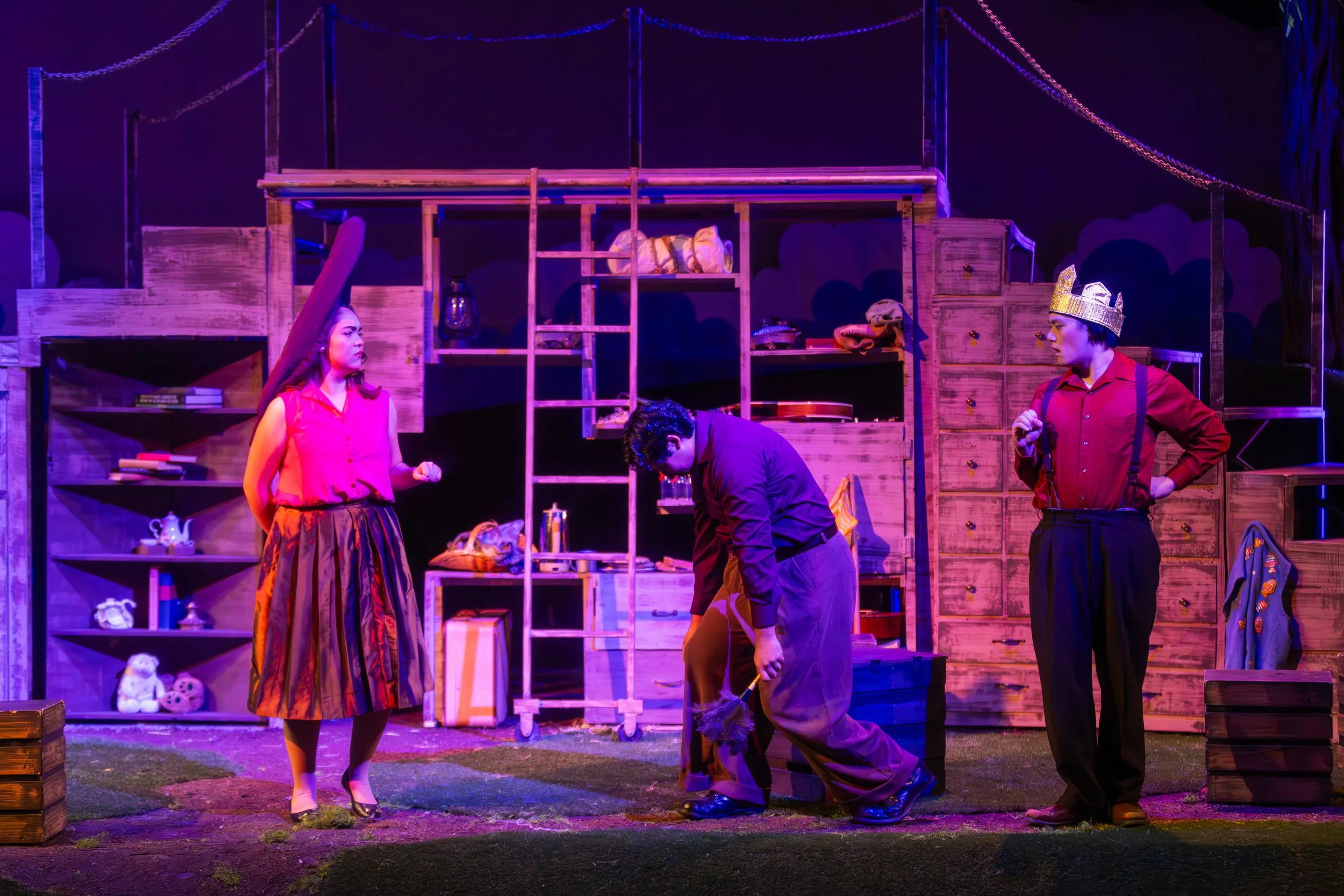
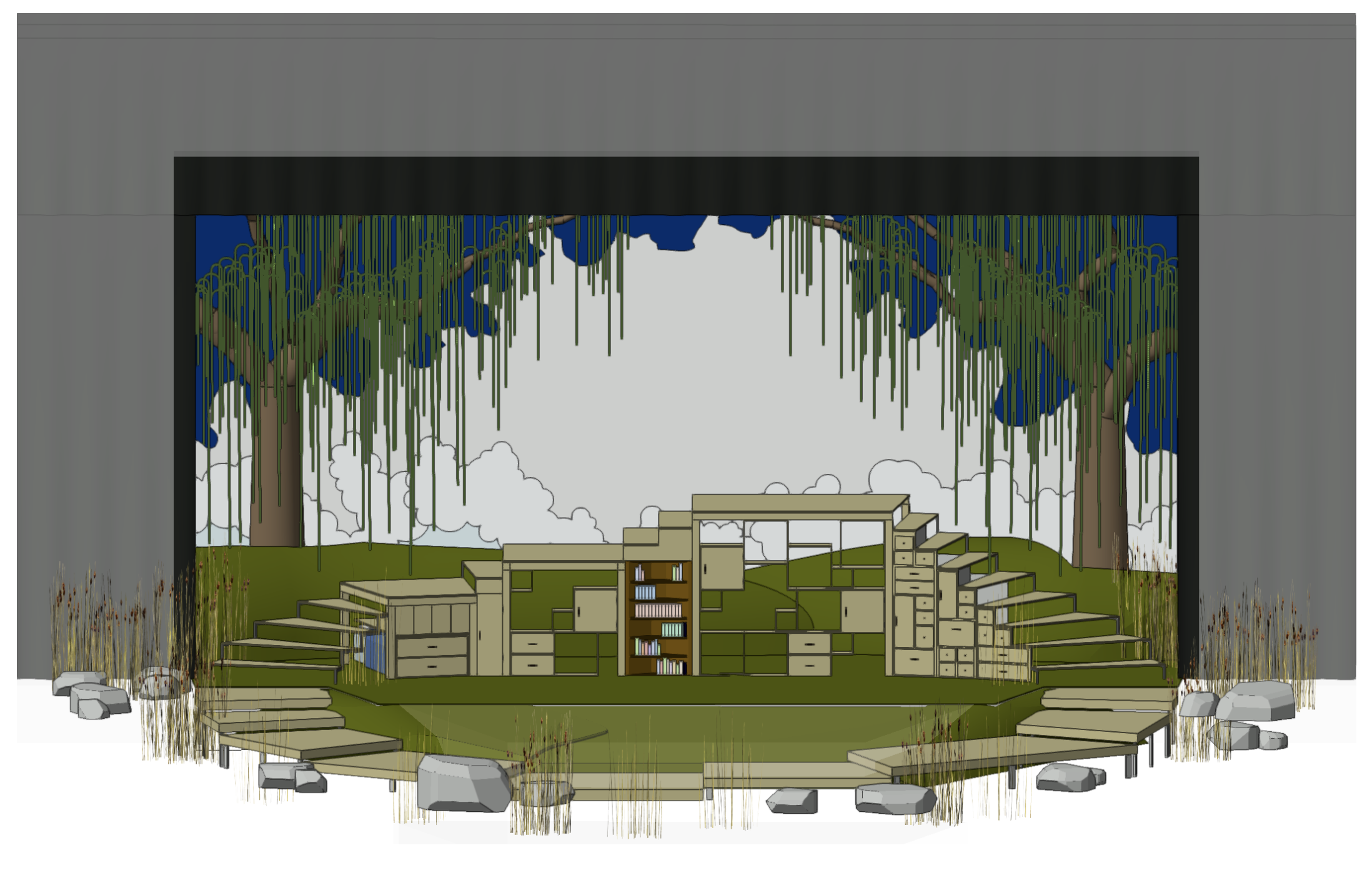
Before beginning our journey with building this set, I drafted everything on Vectorworks 2024 (Partial Package available here). As previously mentioned, our set had to be a variety of different settings without having anything be literal. I knew I wanted to create a path that could be used infinitely, as our various characters walk through various spaces and lands, and the only infinite path would be a round one. Aesthetically, I was inspired by run-down marshes and swamps found in the south, and the moss eaten wooden paths. I loved these textures and colors and they eventually became the main look of my set. Our director wished to have our actors never leave stage, so all costumes, props, and additional scenic elements had hide somewhere on stage. Thanks to this, we had a variety of shelves, drawers, cabinets, sit-able crates, and even some facade rocks that held various handheld props and costume pieces the actors would use to transform themselves into different characters.
Further Magic and Takeaways
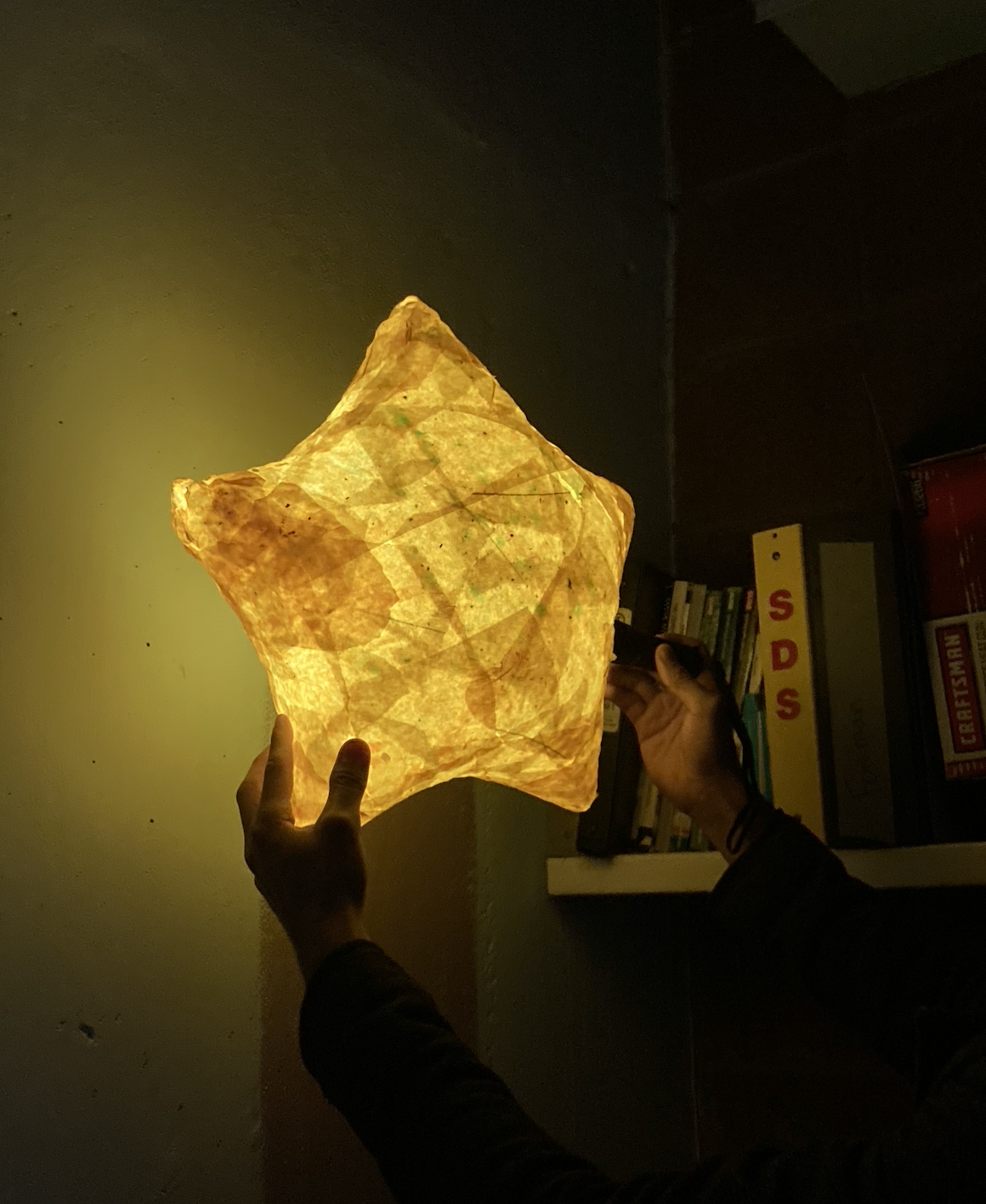
In the beginning of my process for this show, I wanted to create something magical and memorable for a child’s first experience at the theatre. Not pictured were star lanterns hung over the audience, which would light up during the segment of the show where the characters would discuss constellations. Also not pictured is the sticker drop we would conduct at the end of the show, which would scatter stickers that said “You Are Loved” across the theatre. Our show, by the end of its run, was shown to over 1,000 children in our city. This was a project that I think I would have loved to have seen as a kid, and that is all I could have asked for in the product.